
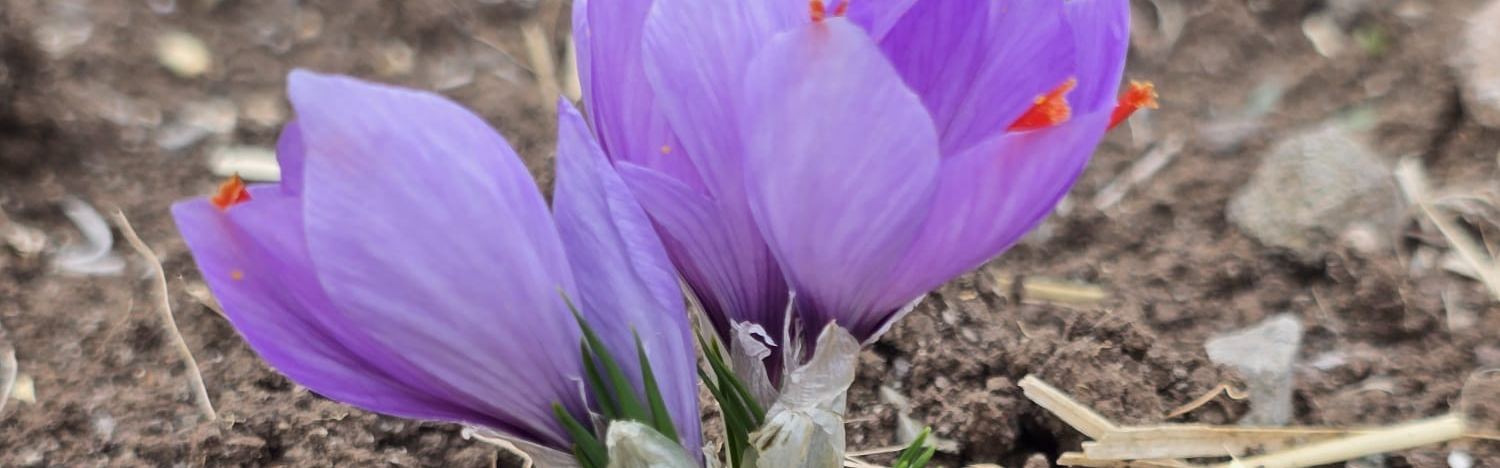
Before you start growing saffron
Growing saffron takes the right timing, suitable soil and patience, but it rewards the effort. This guide is a starting point for everyone, from hobby gardeners to farmers and entrepreneurs planning commercial production.
Who is it for?
- Hobby gardeners: Small-scale growing in the garden or in pots.
- Farmers: Adding an alternative crop to existing production.
- Entrepreneurs: Planning saffron production as a business.
The yearly cycle
- Late summer – early autumn: Planting the corms.
- Autumn: Flowering and harvest.
- Winter – spring: Leaf growth; the corms build up reserves.
- Summer: Leaves die back; dormant period.
Site and soil
Choose a sunny site with light, loose, well-drained soil. In heavy soil that holds water, corms can rot. Work the soil well and clear weeds before planting.
Choosing corms
Choose healthy, firm, dry corms with no sign of mould. Corm size affects how many flowers you get in the first year.
Planting
Plant the corms pointed end up, generally about 10–15 cm deep. Plan row and in-row spacing according to planting density and site conditions.
Watering and care
Saffron suffers more from too much water than from drought. Water moderately, according to soil type and rainfall. Weed control matters for corm development. Do not cut the leaves until they turn yellow, because the corms feed through them.
Harvest
Pick the flowers on the day they open, ideally early in the morning. Then separate the three crimson stigmas from each flower by hand.
Drying and storage
Dry the stigmas under suitable conditions and store them in containers protected from light, moisture and air.
Multiplying corms
Corms multiply in the soil over the years. Lifting, dividing and replanting crowded corms every few years supports yields.
Note: This guide is for general information. For planning specific to your climate and soil, we also recommend seeking advice from local agricultural experts.